“The Beacon intended to advance healthcare and education in the region as a part of the overall effort to make the Permian Basin a more livable and attractive environment for professionals in the future,” said Russell Meyers, the CEO of PBMC. “We have a bunch of things planned, all intended to enhance the range and quality of services available to people in the Permian Basin. It’s driven by the desire and need to have this area become an attractive place for people to come and make a career and life here.”
The Beacon will be located at the intersection of State Highway 191 and Farm-to-Market Road 1788. While overall schematics are still being planned, the Beacon will cover about 400 acres of land, 270 of which were donated by Diamondback Energy, with the remaining approximately 100 acres (which borders the two highways) being donated by the Scharbauer Foundation.
In addition to being located just north of Midland International Air and Space Port, the Beacon will be built adjacent to University of Texas Permian Basin’s Midland campus. These nearby facilities, coupled with being located almost directly in-between Midland and Odessa, makes the location ideal.
The roads are as follows:
An arterial boulevard: This thoroughfare will serve as the southern and eastern borders of the Beacon. The south portion will cost $22,272,000 to build, while the east portion will cost $26,520,000. A traffic light will also be built at the road’s intersection with FM 1788.
“That light is a big advantage to the project and for traffic in and out of Wagner Noel and the rest of the UTPB campus there because they don’t have access to a safe left turn or southbound access point there, so that will be a big benefit to everybody,” Meyers said.
Midland County has provided $11.1 million to build the initial two-lane version of the boulevard, with money from the state then being used to enhance the road.
A main street: A section of a new main thoroughfare will be extended into the Beacon, intersecting with the east portion of the arterial boulevard. The portion west of the arterial boulevard will cost $1,080,000, while the portion to the east will cost $4,440,000. The Beacon hopes the area around the road will be used for residential, retail and hospitality development, as well as an easier access road for those visiting Wagner Noel.
Innovation Boulevard: This road is being built adjacent to the currently existing Energy Road, weaving through UTPB’s Midland campus. The road will cost $8,280,000 to build. It will be used to get people more easily from the Beacon over to the UTPB campus and vice versa.
“Along Innovation Boulevard, we hope that over time we’ll see development of research and development facilities for people who want to turn things that we’ve learned here into marketable products,” Meyers said.
In addition to the roads, Central Park will be built throughout the rest of the area. The park’s infrastructure is expected to cost $52,920,000 to build, while $7,800,000 will be on utilities such as sewage, electricity and gas.
“It’s essentially a green space in the desert, following a set of natural depressions in the land that carry water runoff when we have heavy rain,” said Meyers. “It’s essentially a marsh land, and we intend to develop that and turn it into park space. The design of the park is still to be determined, but it will be something natural, fits the environment here but also have some amenities and be a nice place to be outside and add some flavor to the overall development that helps it feel more natural.”
Overall, the infrastructure side of the project has a budget of $123,312,000. This money was provided by the state of Texas in previous legislative sessions, beginning in 2021 and 2023; the state is also providing capital funds for some of the medical facilities. Money for individual facilities will be donated separately, including by raising money locally.
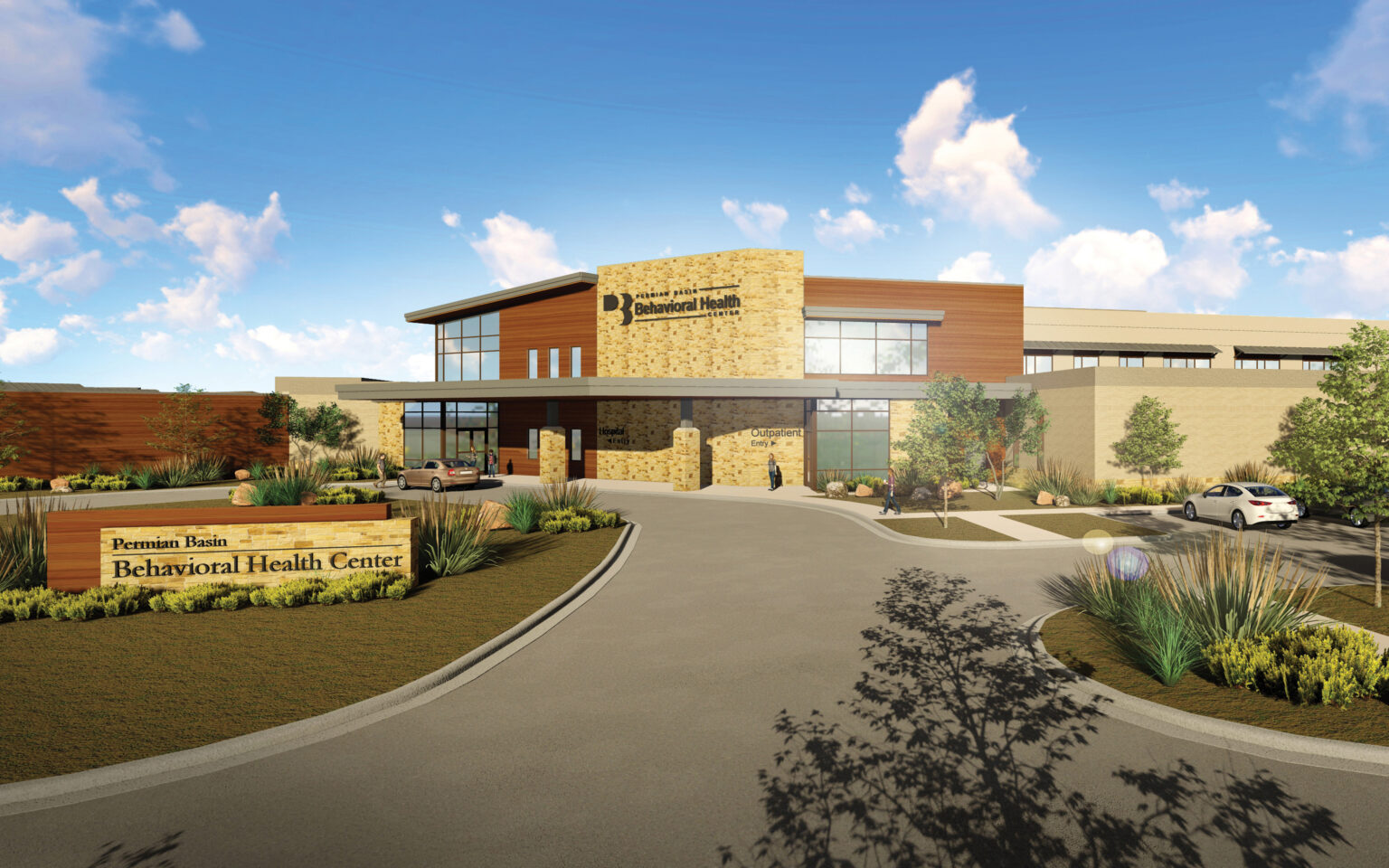
The first facility will be the Permian Basin Behavioral Health Center, a $90 million joint project between Medical Center Hospital and Midland Health that Meyers estimates to be completed in one to three years. Texas Tech University will be in charge of the Behavioral Health Center’s psychiatry division.
“And there is plenty of opportunity for them to do other things or join with other providers in doing other things with the Beacon as it grows and evolves,” said Meyers.
Other individual medical facilities will be established over time, with Meyers expecting the whole project to take about two decades to complete.
“The Beacon is going to be developing over many years, but it could be as important as any development in this region and enhance the quality of life here,” said Meyers. “We’re very excited about the opportunity.”
More information on the Beacon can be found on their website here.